For most companies in Syria in 2026, leasing cars is simpler than buying them, and often cheaper once everything is counted. A lease swaps a large purchase and years of registration, insurance, servicing and breakdowns for one fixed monthly invoice. Buying wins mainly when a company will keep a car for many years and has someone to manage it.
This page is for the person who has to recommend one or the other to a board, a partner or a donor. It sets out the comparison line by line. It is written by a leasing company, so we have tried hard to be fair to buying — where buying is the better answer, we say so.
What you are really comparing
The sticker price of a car is the smallest part of the decision. Owning a company car means taking on a list of jobs that run for as long as you own it:
- finding the cash to buy it, or the finance to borrow it;
- registering it, and renewing that registration every year;
- insuring it, and renewing that too;
- servicing it, replacing tyres and wear items, and keeping records;
- dealing with breakdowns and accidents, and finding a car for the person whose car is in the workshop;
- selling it at the end, at whatever the market pays that year.
A lease hands every item on that list to someone else. Our corporate lease covers scheduled servicing, tyres and wear items, comprehensive insurance and annual registration, brings a replacement car if one is off the road, and puts every vehicle on one itemised monthly invoice at a figure that does not change for the term.
Cash on day one
Buying: the whole price leaves the company at the start, or a loan does, with interest. That is money not spent on staff, stock or the work the company exists to do.
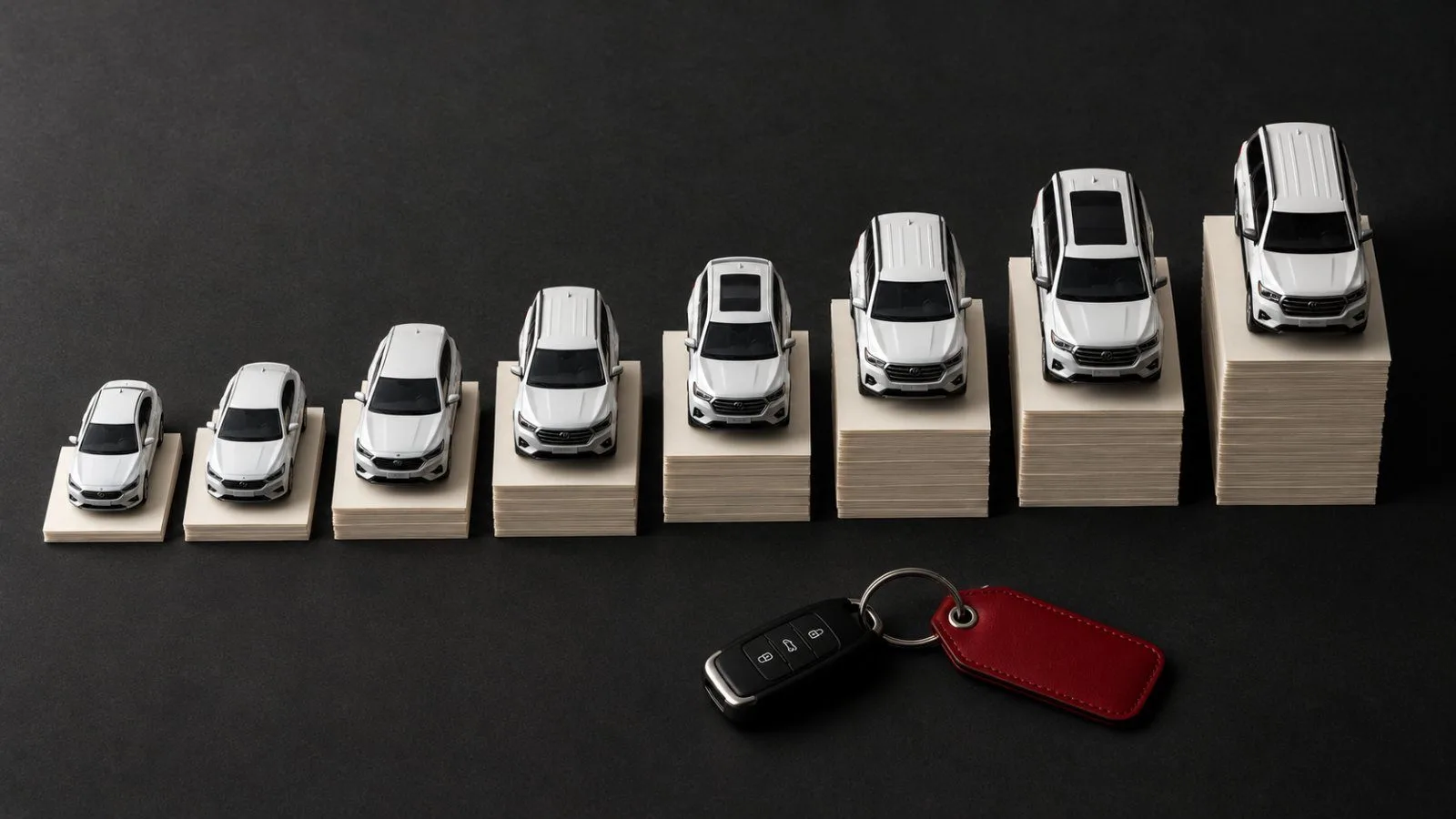
Leasing: nothing is paid up front beyond the first month. Indicative single-vehicle rates as of October 2026 are 1,100 USD a month for a sedan such as the Kia K3, 1,500 USD for a Hyundai Creta compact SUV, 1,600 USD for a Kia Sportage and 2,500 USD for a seven-seat Kia Sorento. A fleet is quoted as a fleet, so the more cars and the longer the term, the lower the figure.
For a growing company, this line alone usually decides it.
Predictability
Buying: the running cost of an owned car arrives in lumps — a set of tyres, an insurance renewal, a gearbox, an accident. A year with two of those is a bad year for the vehicle line.
Leasing: one number, every month, for twelve, twenty-four or thirty-six months. Finance can write it into the plan once and leave it there.
When a car is off the road
Buying: a car in the workshop is a person who cannot do their job, unless the company keeps a spare — which is another car to buy, insure and register.
Leasing: we bring another one. This is the line companies tend to underestimate until the first time it happens.
The end of the term
Buying: the company owns an asset and can sell it. In a market where good used cars hold their value, that resale is real money and is the strongest argument for buying.
Leasing: the car goes back. At the end of the term you renew, change the cars, or stop. There is no resale to collect — and no resale to manage either.
When buying is the right answer
We would rather say this plainly than lose your trust. Buying is usually the better choice when:
- the company will keep the same vehicle for many years, well beyond a three-year term;
- it already employs someone whose job includes managing vehicles, so the chores cost little extra;
- the vehicle is specialised — converted, branded or fitted out — in a way a lease cannot carry;
- the work needs vehicles for unmade roads or off-road use, which is outside the cover of our lease and rental cars.
The questions that are not ours
How a lease or a purchase is treated in your accounts and for tax, and whether either affects your obligations to donors or partners, are questions for your accountant and your own advisers. We can supply a written quotation, the contract and itemised invoices in whatever format they need to decide.
Somewhere in between
Not every company is ready for a three-year contract. Many start with monthly rentals, which need no contract, and move to a lease once they know how many cars they really use. We wrote about where each one makes sense in daily, monthly or a lease.
A short list for the recommendation
- Count every cost of owning, not only the purchase price.
- Estimate what a car off the road for a week costs you.
- Decide how long the company will really keep each vehicle.
- Check whether the work needs off-road or specialised vehicles.
- Ask your accountant how each option is treated in your books.
- Ask for a written lease quotation — it arrives within two working days.
Fleet enquiries are handled by the branch managers themselves: +963980436125 or hello@tab-car.com.